The Charter for the Sustainable Wine and Food Tourist
Download CarTES
Want to learn more? Download the Charter for the Sustainable Food and Wine Tourist!

The Project
The Right Solution
The impact of tourists on the environment is estimated to be three times greater than that generated by residents.

What is CarTES?
Welcome!
The"Charter for the Sustainable Wine and Food Tourist" is a guidebook for experiencing the gastronomy of an area while respecting the environment, culture, and local community.
In a world with limited resources, where consumption exceeds what is actually available, adopting a sustainable approach when traveling is no longer a choice, but an imperative.
In a world with limited resources, where consumption exceeds what is actually available, adopting a sustainable approach when traveling is no longer a choice, but an imperative.
What you will find in this guide
Directions and practical tips to make your gastronomic journey more sustainable.
By reading this guide, you will learn about sustainable practices that you can easily adopt on your next trips to fully appreciate the local gastronomic richness with a reduced impact on the environment, society, and culture.
By reading this guide, you will learn about sustainable practices that you can easily adopt on your next trips to fully appreciate the local gastronomic richness with a reduced impact on the environment, society, and culture.
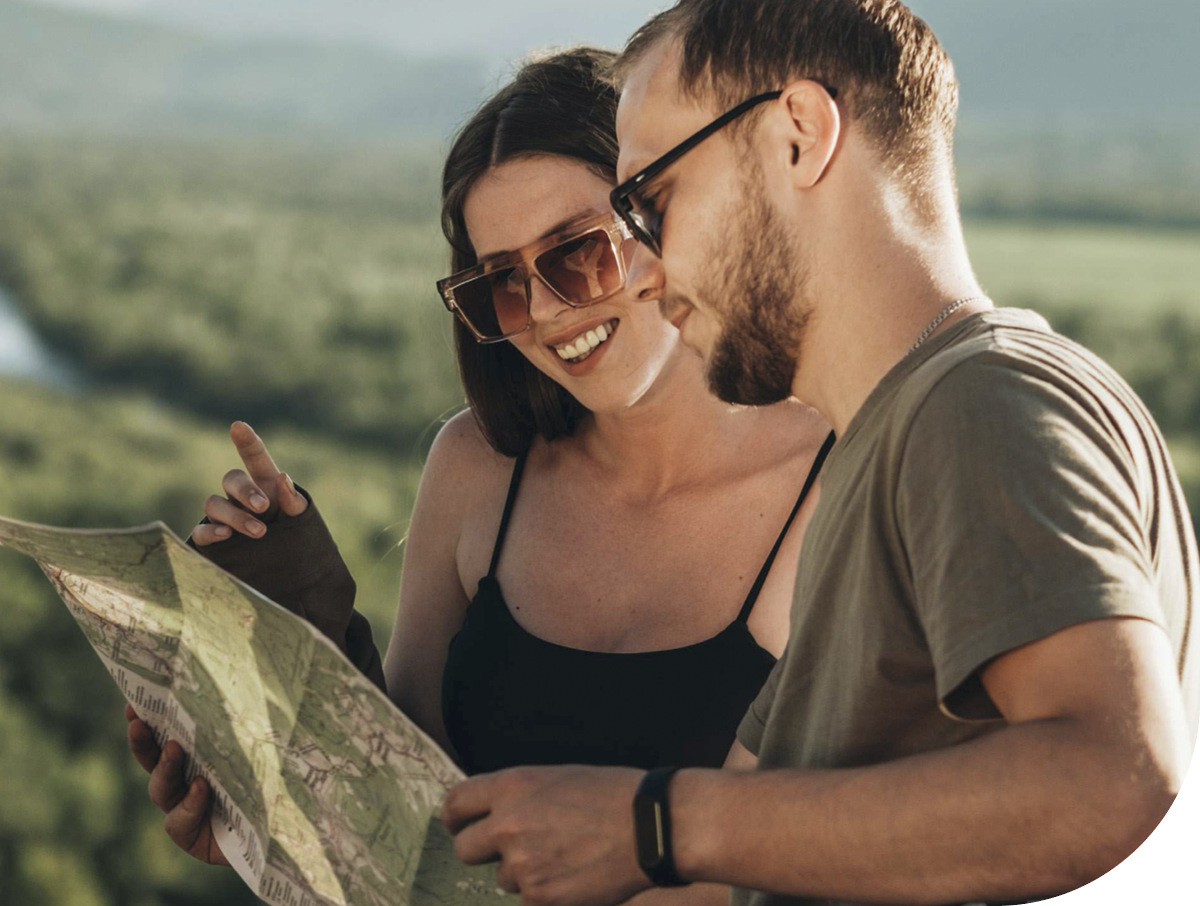
The Charter for the Sustainable Wine and Food Tourist
Before the Trip
Want to learn more? Download the Charter for the Sustainable Food and Wine Tourist!
Think First About the Experience You Want to Have
When planning a gastronomic trip, reflect on the kind of experience you want to live and the type of tourist you wish to be. Do you prefer a walk through olive terraces or a visit to the historic center of a big city?
Choose Sustainable Gastronomic Destinations
Opt for a destination that promotes sustainable practices, ideally one that has received recognized national or European certifications. Check if the destination promotes these values on its website and shares its achievements in sustainability.
Rediscover Italy, Supporting Rural Food and Wine Traditions
Explore the food and wine richness of Italy’s rural areas and small villages, discover the regions you have never visited. Our country is extremely rich in cultural, environmental and food and wine resources in every corner. Just think: have you visited all 62 Italian sites inscribed on the UNESCO World Heritage List? Visiting these areas lets you discover authentic products, meet producers and contribute to the sustainability of the region, with a positive impact from a socio-environmental point of view.
Choose the Right Time
Consider planning your trip during less crowded days and times to have a more authentic experience. Traveling during off-peak seasons not only enhances your trip but also supports the well-being of local residents and reduces the pressure on local resources.
Prefer Eco-Friendly Transportation
Only take a flight if no viable alternatives exist. Instead, choose public transportation, car-sharing, or bike-sharing to reach production sites, events, or the starting point of your food or wine tour.
Embrace Slow Tourism
Avoid day trips that contribute to overcrowding without providing real benefits to local communities. Staying in agritourism accommodations, campsites, or small hotels allows you to delve deeper into the region’s traditions, support the local economy, and contribute to a more responsible and sustainable form of tourism.
Learn About Local Habits and Traditions
Read gastronomic guides that tell the story of the region’s culinary excellence, local products, production methods, and food customs. Informing yourself about local habits and traditions will help you better adapt to and respect the culture of the places you visit.
Rely on a Local Expert
Turn to a local guide to plan your trip. They will help you discover the region’s gastronomic heritage authentically, respecting local traditions and communities. A local expert can also suggest the best times and less crowded itineraries, even in busy tourist spots.
Turn Off Lights and Unplug electronic Devices Before Departure
Even when not in use, many devices continue to consume energy if left plugged in. Before leaving, turn off the lights and unplug or completely switch off unnecessary electrical devices. Standby consumption can also be avoided, although it varies considerably depending on the type and age of the appliance.
The Charter for the Sustainable Wine and Food Tourist
During the Trip
Want to learn more? Download the Charter for the Sustainable Food and Wine Tourist!

Respect the Local Community
While traveling, remember that you are visiting someone else’s “home,” and respectful behavior fosters mutual respect. Learn a few phrases in the local language and engage in food and gastronomic experiences that allow you to interact directly with the local people, helping you connect and share authentic moments from their daily lives.
Support the Local Gastronomic Economy
Prioritize purchasing products, services, and experiences from locally owned businesses to support the microeconomy of the area and the craftsmanship of the host community.
Comply with applicable environmental regulations
Pay attention to waste separation. Reduce plastic use as much as possible, opting for water bottles and cloth bags instead of single-use products.
Prefer green modes of transport
Tourism has a significant climate footprint. A study published in Nature Communications in 2024 estimates that the overall footprint of tourism reached almost 9% of global greenhouse gas (CO₂e) emissions in 2019, considering the entire tourism consumption chain and not just travel itself. Reduce your environmental impact by moving preferably by public transport, bicycle and/or on foot (the latter also benefiting your personal health). Where available and of interest, choose, depending on the destination, horseback, canoe or sailing routes
Actively Contribute to Environmental Protection
Set aside time to participate in sustainability initiatives, such as beach clean-up days or tree-planting activities, to actively contribute to preserving the environment.
Choose typical, seasonal products
Choose local activities, with typical, seasonal drinks and food. Look for locally produced extra-virgin olive oil and ask about the producers. Where tap water is safe to drink, favour reusable bottles and refill systems. When bottled water is necessary, prefer reusable systems and also consider the source and distribution system: the packaging material alone does not determine the overall environmental impact. Prefer tastings and purchases of certified and/or organic products. Visit businesses with sustainability certifications and an ethical approach towards workers and animals, and that involve the community in farming and/or winemaking activities. Choose to visit local artisans.
Visit Farmers’ Markets, Shops, and Artisans of Taste
Visit shops and farmers’ markets where you can learn about local products, their characteristics, and receive useful advice on preparation and preservation. Choose to visit local artisans and food and wine establishments that honor tradition.
Reduce Food Waste
Avoid wasting food and drink by ordering only what you really want to consume. Respect the food, labour and energy that went into producing it. Avoiding waste is particularly important for foods that embody significant amounts of energy, water, land and other inputs along the supply chain. However, the impacts depend on the product and the production system and cannot be translated into a single equivalence valid in every context.
Limit Water Use
Reducing shower duration helps reduce water consumption; the amount actually saved depends on the flow rate. As a reference, the EU Ecolabel criteria for accommodation facilities set a maximum average flow rate of 8.5 litres per minute for bathroom taps and showers; for high-efficiency showers the award criterion is 7 litres per minute or less. Reducing shower time still helps ease pressure on water resources, which are essential for food production that, especially in Southern Italy, suffers the consequences of climate change and drought.
Avoid Daily Linen Changes in Hotels
Avoid changing towels and linen daily when not necessary. Reducing the frequency of washing helps limit the use of water, energy and detergents. Under the EU Ecolabel criteria for accommodation facilities, the default change of sheets and towels must occur less frequently than daily, except where required by regulation or explicitly requested by the guest.
Regulate Room Temperature
Use heating and air conditioning responsibly, avoiding extreme temperatures and reducing their use when not necessary. Energy savings depend on the characteristics of the building, the system and the climate and cannot be expressed as a single percentage valid for all facilities. Hotels with smart technologies optimise efficiency, but a personal contribution can further reduce energy consumption.

The Charter for the Sustainable Wine and Food Tourist
After the Trip
Want to learn more? Download the Charter for the Sustainable Food and Wine Tourist!
Reduce Your Ecological Footprint
Use transportation more responsibly and consciously by favoring public transport, walking, or cycling. Just like during your trip, aim to reuse and recycle as much as possible, starting with small actions like properly separating waste and using cloth bags when shopping.
Support Local Businesses
Choose to buy local, seasonal products, thereby favouring local small producers. “Local” does not automatically mean lower environmental impact: favour transparent local supply chains, also considering production, storage and transport methods.
Eliminate Ultra-Processed Foods from Your Diet
Favour a varied, balanced diet based mainly on unprocessed or minimally processed foods, and limit consumption of foods high in sodium, free sugars and unhealthy fats: overall diet quality is an important determinant of health. The concept of “Global Syndemic”, which describes the interactions between obesity, undernutrition and climate change, was formulated by the Lancet Commission on Obesity in 2019 (Swinburn et al.), not by the EAT-Lancet Commission.
Adopt Healthier and More Sustainable Lifestyles
Follow the principles of the Mediterranean Diet by eating seasonal fruits and vegetables more frequently. This benefits both your health and the environment. According to the World Health Organization, the high antioxidant and fiber content of this diet is associated with a reduced risk of chronic and cardiovascular diseases.
Preserve and Share Traditional Culinary Knowledge
Pass down family recipes and local culinary traditions to younger generations, enhancing Italian traditional cuisine as cultural heritage. When hosting friends and family, prepare dishes using typical local recipes and introduce them to nearby producers.
Reconnect Younger Generations with Food and Nutrition
Teach younger generations (children, grandchildren, etc.) to eat healthily by following the guidelines of the food pyramid. Take them to visit local farms and encourage schools to do the same. It’s also crucial to ask schools to promote healthy eating habits, avoiding vending machines stocked with ultra-processed foods in favor of fresh, nutritious alternatives.
Promote Sustainable Food and Wine Travel Experiences
Share your experience on social networks, especially regarding your satisfaction with the sustainability of the places and accommodations you visited. Constructive feedback helps operators improve their eco-friendly practices.


News ed Events
Last News
Contacts
Str. Massetana Romana 58/B
53100 Siena, Italia
P.IVA 123456789000
53100 Siena, Italia
P.IVA 123456789000
Avantage
Headquarters
Visualize quality intellectual capital without superior collaboration and idea sharing installed base portals.
Our locations
Where to find us?

Get in touch
Avantage Social links
Taking seamless key performance indicators offline to maximise the long tail.
